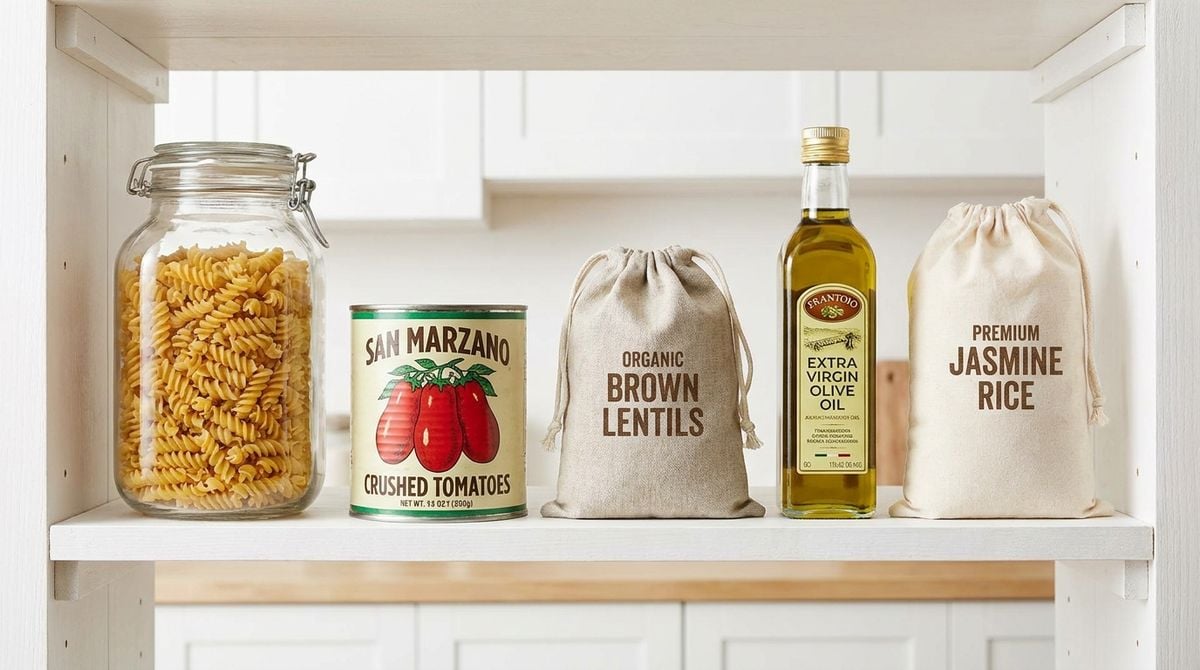

A kitchen in the middle of a refit often has bare shelves, a missing cupboard door and a pantry that is either full of dust or completely empty. Stocking that space can feel pointless when the room is about to be transformed, yet a well-chosen pantry makes every meal easier. The goal is to build a stock of practical staples gradually, so that you always have something to cook without rushing to the shops. This guide explains how to choose, store and rotate the basics while the building work carries on around you.
Choosing staples that earn their place
Start with foods that are useful in many dishes. Dried pasta, rice, oats, lentils, tinned tomatoes, tinned beans, stock cubes, flour and a few jars of sauce cover a wide range of meals. Add a small selection of spices and dried herbs, and a bottle of good cooking oil. These items are inexpensive relative to the convenience they offer, and they keep well for many months when stored correctly.
Think about the household’s habits as well. If the family eats bread every day, keep a reliable source of flour or ready-made bread that lasts. If someone is vegetarian, make sure there are enough protein staples that suit them. A pantry should reflect real meals, not an idealised list copied from a magazine.
Storing food where dust cannot reach it
Building work produces fine dust that can contaminate open food. The simplest protection is to store every dry ingredient in a sealed container with a tight lid, and to keep those containers on shelves that are away from the work zone. Label each container clearly with the name and the date of opening, so that you can see what needs using first. Use a marker that wipes off cleanly for temporary labels, and keep spare labels in the same place as the containers. A label that has faded or come loose can cause confusion later, when a container looks similar to another. Many households also find it useful to write the purchase month on the base of each tin, so that older stock is easy to spot even when the lid is hidden. Glass or sturdy plastic containers work well, and a few clips or elastic bands can help keep packets closed.
Readers may also want to visit Bitmoji. Avoid placing food near radiators, windows that are often opened during the works or the boxes of tools that dust may fall from. If shelving is temporary, check it regularly for stability, because heavy jars can slip when a board is moved.
Rotating stock and avoiding waste
Rotation is the quiet secret of a good pantry. Place newer items at the back of the shelf and older items at the front, so that you use the oldest first. Check dates each time you cook, and move anything nearing its best-before date into a meal you plan for that week. A simple shopping list kept on a noticeable surface helps you buy only what is missing, which prevents duplicates from building up in a dim corner. If the list lives on a phone, add a shared note so that everyone in the household can add items as they run out, rather than discovering the gap at dinner time.
You can also visit awomansviews.com for more reading. Write down the main items on a sheet taped inside a cupboard door or kept on a phone, and update it each time you put food away or throw something out. The list becomes a short, useful reference that stops you buying a third tin of tomatoes when you already have two.
Using a simple stocking plan
Stocking a pantry during building work works best when it is done in small steps. Each week, pick one or two areas to fill, such as the grains or the tins, and add a few items that fit your usual meals. Try to avoid large bulk purchases if storage is limited, because a crowded temporary shelf can be hard to manage.
Keep a short plan with the following steps:
1. Choose five or six staples that appear in most of your family’s meals
2. Store each dry item in a sealed, labelled container away from the work zone
3. Check dates once a week and move older items to the front
4. Note what is running low and add it to the next shop
Remember that a pantry is also a place to find comfort. A small tin of soup or a packet of biscuits can make a difficult day feel more manageable. For a related read on this site, see Planning Dinners for a Couple Where One Partner. Whatever approach you choose, keeping the pantry tidy and well stocked will make the coming months easier.
When the building work finishes and the new shelves are fitted, you will have a working pantry and a clear sense of what your household really uses. The months of careful stocking will have taught you how much to buy, how to store it and how to keep waste low for the long term.