
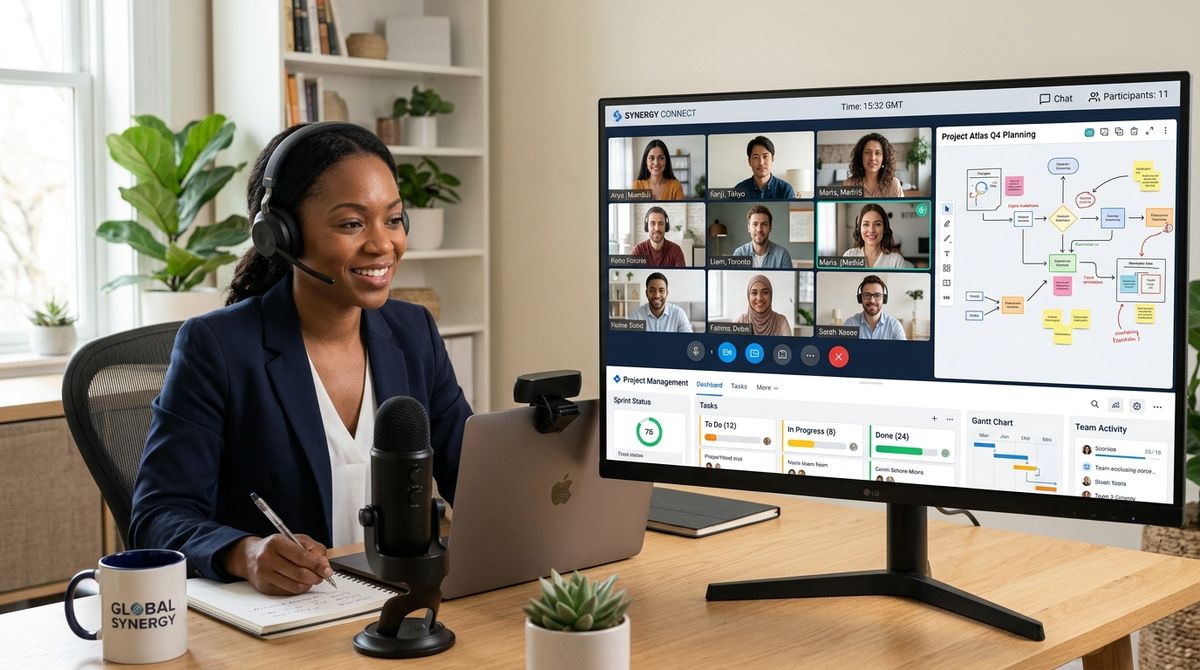

Running a business demands sustained focus and clear decision-making. Entrepreneurs often find themselves caught in a cycle of constant productivity without realizing how personal management influences professional outcomes. True success requires balancing the demands of operating a company with the necessity of maintaining personal well-being. By understanding how to manage both, leaders can build organizations that are resilient against the inevitable stresses of growth. This approach shifts the focus from merely surviving to thriving, ensuring that the passion that fueled the start of the venture remains intact over time.
Defining Sustainable Growth
Growth in a business context should be measured by more than just output. It involves creating a foundation that supports the founder and the team over the long term. Many entrepreneurs equate success with constant, rapid activity, but this often leads to exhaustion. Instead, sustainable growth relies on deliberate actions that conserve energy while maximizing impact. Establishing a sustainable pace means recognizing that business success is a marathon rather than a sprint. When leaders prioritize clarity and deliberate action, they foster a culture where creativity can flourish without being stifled by perpetual urgency.
Creating this foundation starts with an honest assessment of current workflows and personal limits. It requires a willingness to refine how time is spent, both inside and outside the office. By focusing on what truly drives progress, entrepreneurs can shed unproductive habits and concentrate on the activities that offer the most value. This creates space for deeper thinking and more strategic planning, which are essential for long-term endurance.
Managing Personal Demands for Better Business Clarity
For entrepreneurs managing family life alongside their professional responsibilities, simple organizational strategies can alleviate unnecessary pressure. When the chaos of daily personal management is reduced, mental capacity increases, allowing for sharper decision-making at work. Finding practical ways to streamline household tasks can be helpful. Resources like simplesavingsforatlmoms.com offer methods for managing home responsibilities that can help eliminate some of the stresses that otherwise distract from business priorities.
Reducing external distractions in personal life allows leaders to return to their work with a renewed sense of purpose. When the home environment is orderly and manageable, it frees the mind to focus on complex business challenges. This synergy between personal organization and professional focus is a key trait of resilient entrepreneurs. Taking the time to build these structures is not an indulgence but a necessary investment in professional longevity.
The Necessity of Strategic Disconnect
Professional burnout is a significant risk for those leading organizations. It is essential to develop habits that allow for true mental detachment from work. Engaging in activities that require focus but are disconnected from professional outcomes can provide a necessary reset. For some, digital leisure can be a viable form of relief. Exploring avenues like Fiber Gaming provides a way to decompress and pass time, helping to recharge for the challenges that arise in the professional sphere. The ability to switch off completely is just as crucial as the ability to work intensely.
Finding methods to detach prevents the stagnation that occurs when a mind is locked into a single mode of thinking. When an entrepreneur steps away, they often return with fresh perspectives and solutions to persistent problems. This downtime is not unproductive; it is an active part of the creative and decision-making process. Cultivating the discipline to fully disconnect ensures that when it is time to engage with business challenges, the focus is sharp and refreshed.
Integrating Systems into Daily Operations
Once personal and mental boundaries are established, business systems must be refined to support growth without creating dependency on the founder. It is not enough to simply work harder; one must work within frameworks that facilitate progress. Learning how to build better business systems can provide the necessary structure to ensure that creative ideas translate into operational success. These systems should be flexible enough to adapt while providing enough consistency to allow for team autonomy.
Effective systems act as a guide for daily operations, reducing the need for constant supervision and allowing the business to run smoothly. They capture knowledge and processes, turning them into repeatable actions. When these frameworks are properly implemented, the burden of managing every detail is lifted from the entrepreneur, allowing them to focus on high-level strategy and vision. This transition from manual management to systematic operation is essential for scaling a business while maintaining sanity.
Maintaining Perspective Through Constant Change
The entrepreneurial path is rarely linear. Challenges are inevitable, and the ability to maintain perspective during turbulent times distinguishes successful leaders. When the business environment changes, the temptation is often to react impulsively. Instead, maintaining a steady approach grounded in the established systems and personal habits described above allows for more considered responses.
To keep this perspective, consider incorporating these practices:
- Dedicate specific periods for reflection to assess the direction of the business.
- Prioritize tasks that align with core goals to prevent being overwhelmed by minor issues.
- Seek feedback from mentors or peers to challenge assumptions and gain new insights.
- Ensure regular time for rest to prevent the gradual erosion of focus.
Ultimately, the goal is to create a business that serves the founder’s vision while respecting their humanity. By intentionally managing personal life, strategically disconnecting, and building robust operational systems, an entrepreneur can create a path that is not only successful but also sustainable. This balanced approach provides the endurance needed to navigate the challenges of entrepreneurship and to continue discovering opportunities for growth and leadership long into the future.