
Every emerging business eventually reaches a stage where digital slide decks and screen recordings cannot convey the full story. Prospective partners, enterprise clients, and key job candidates often need to examine physical prototypes, handle production materials, and see hardware in action. Setting up an in-house product showcase provides that tangible connection. It turns conceptual diagrams into an immediate hands-on encounter that leaves a clear impression on visitors.
Creating this space does not demand an expensive commercial renovation or custom architectural millwork. Early-stage teams benefit most from keeping their environment practical, adaptable, and focused on utility. When founders treat the display area as an active workshop rather than a rigid museum, the room becomes a productive resource for internal reviews as well as client walkthroughs.
Clarifying the Primary Purpose of Your Display Space
A frequent misstep among founders is attempting to build a single showcase that satisfies every audience at once. An engineering review requires bright task lighting and open access to internal wiring, whereas an executive meeting calls for tidy surfaces and finished enclosures. Before buying fixtures or moving furniture, the team must decide who will use the space most frequently.
Focusing on one clear goal keeps the layout purposeful. If the main objective is closing commercial accounts, prioritize finished units, retail packaging, and clear benefit callouts. If the focus is co-development with technical partners, reserve surface area for component trays, schematics, and testing equipment. Defining this boundary early prevents the room from becoming a catch-all storage corner.
Once the objective is established, set simple internal agreements regarding how team members treat the area. Clarify whether display models can be borrowed for field testing or if they must remain stationary. Straightforward rules maintain order, ensuring the space stays ready for scheduled or drop-in visits.
Selecting Modular Furnishings and Layered Lighting
Rigid, heavy furniture restricts an evolving business. Product dimensions change, lineups expand, and demonstration styles shift as the company grows. Opting for modular tables, adjustable wall tracks, and rolling utility carts allows team members to rearrange the room in minutes without outside help.
Founders can draw practical inspiration from functional home improvement projects to build cost-effective display stations. Exploring curated upgrade ideas on bTrendie helps teams find durable materials, versatile shelving, and clever workshop storage solutions that look sharp while remaining economical. Combining hardwood surfaces with industrial steel frames creates an authentic workshop aesthetic that reflects hands-on craftsmanship.
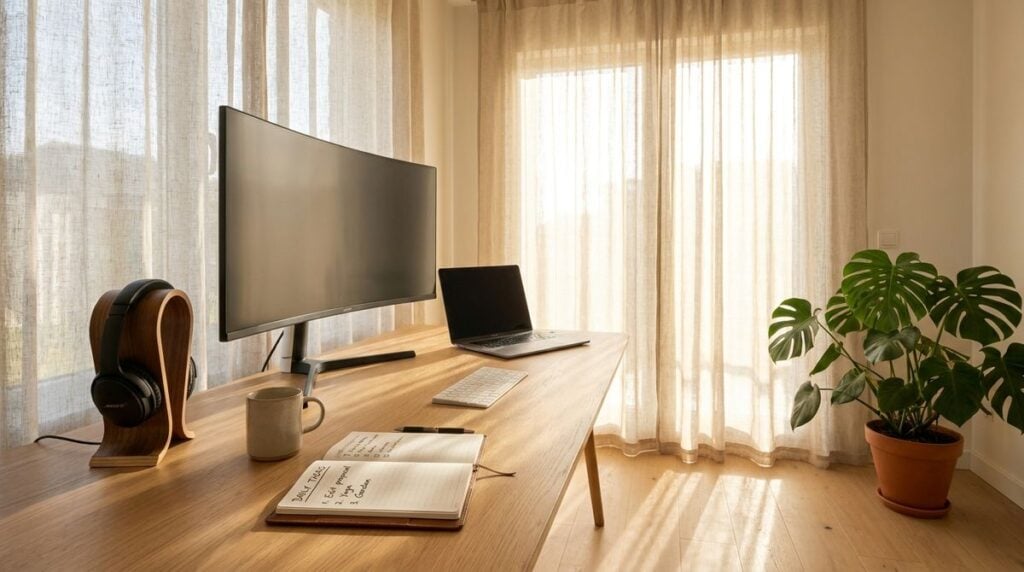
Lighting also requires deliberate planning. Harsh fluorescent ceiling fixtures wash out colors and cause glare during presentations. Introducing layered lighting makes the room comfortable and visually engaging:
- Overhead ambient fixtures that provide balanced, glare-free baseline visibility across the entire room.
- Directional task lamps placed above presentation tables to highlight fine finishes and material textures.
- Warm accent lighting positioned behind display shelves to add depth and visual separation.
- Window shades that diffuse harsh natural daylight and eliminate glare on display monitors.
Drawing Inspiration from Diverse Creative Fields
Looking only at direct industry peers often leads to derivative, uninspired showroom layouts. Breakthrough ideas happen when teams borrow display concepts from other disciplines, such as community maker spaces, science exhibits, and boutique retail shops. These environments excel at guiding visitor curiosity without relying on high-pressure sales tactics.
Gaining fresh perspectives from outside your core domain keeps your presentation fresh and relatable. Informative learning platforms like Fruzo offer clear, diverse insights across multiple topics that help founders grasp unfamiliar organizational and design concepts without getting lost in technical jargon. Adopting simple ideas from hands-on museum exhibits, for example, helps engineers label intricate mechanisms so non-technical guests understand them right away.
This cross-disciplinary mindset also shapes how educational information is displayed. Instead of crowded posters or looping video monitors, consider clean explanatory placards and physical material swatches. This hands-on approach respects the visitor’s time, inviting them to explore the hardware naturally at their own pace.
Structuring a Seamless Flow for Hands-On Demonstrations
The path a visitor walks through your space shapes how well they understand the product narrative. A cluttered floor plan forces guests to navigate awkward obstacles, while a clear route guides them smoothly from an introductory greeting to an active demonstration.
Begin by providing an open staging surface where guests can place bags, jackets, or drinks. Clearing their hands changes their posture immediately, making them far more likely to pick up components and test physical controls. The central demo table should sit at a comfortable standing height, prompting active conversation rather than a passive lecture.
After an engaging product demonstration, the discussion naturally turns toward relationship building and long-term collaboration. Many leadership teams follow an informative studio session with hosting meaningful offsite client dinners, creating an informal environment where both sides can talk through partnership terms away from workplace distractions.
Establishing Maintenance Habits to Prevent Clutter
Even a well-conceived showcase loses its impact if the team neglects daily upkeep. Fast-moving startups generate loose cables, prototype scraps, and spare parts that easily migrate onto clear surfaces. Without established routines, an inspiring presentation space quickly turns into a cluttered storage depot.
Appointing a rotating caretaker helps protect the room’s appearance. This responsibility requires only a quick weekly sweep to wipe down presentation models, dust display shelves, check task lighting, and restock information cards. Keeping maintenance light and consistent prevents it from feeling like a burdensome chore for busy engineers.
It is equally valuable to perform a regular audit of displayed hardware. As product versions iterate, older experimental models should move to archival bins so that visitors see only current, high-fidelity prototypes. Curating the space deliberately signals to clients and prospective recruits that the company moves forward with discipline and purpose.
A well-planned product showcase is more than an impressive room for external meetings. It stands as a physical anchor for the entire team, demonstrating the dedication and craftsmanship invested in every item the company builds. By prioritizing adaptable furnishings, drawing inspiration from varied fields, and maintaining regular upkeep, founders can build a functional presentation space that earns client trust and supports long-term commercial growth.