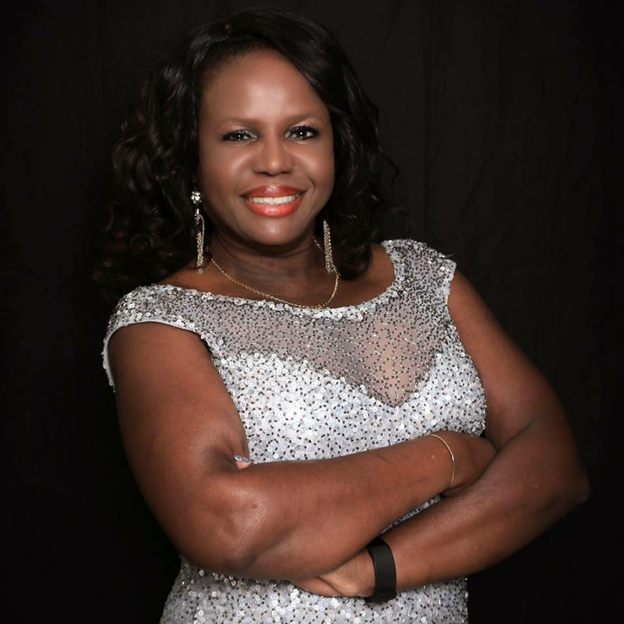

Most life coaches build their brand around achievement. Myrna Young built hers around survival. Raised in poverty and carrying the weight of childhood wounds that most people spend a lifetime burying, Young chose a different path: she went back in, examined what happened, and turned that excavation into a career spanning books, coaching, and one of the most consistently downloaded personal development podcasts in the world.
Her show, Transform Your Mind, has accumulated over 22 million downloads since its launch, reaching women across the globe who recognize something in Young’s voice that they have rarely heard before: someone who has actually lived the story they are trying to escape. Young is a Certified Professional Life Coach, a trauma-recovery specialist, and a bestselling author. She is also the founder of Mindstuff Media LLC, the company behind the podcast and her broader body of work.
Her book, Out of the Snares, is the clearest window into how she got here. It documents her journey out of childhood poverty and trauma, not as a redemption arc packaged for public consumption, but as a framework others can follow. Every principle in the book came from somewhere real. Young did not write it to be inspiring. She wrote it because she needed a record of what actually worked, and she believed other women needed that record too.
What is striking about Young’s trajectory is how deliberate it has been. She did not stumble into coaching or podcasting as a side project. She built Mindstuff Media LLC with a specific mission: help women heal from childhood wounds, renew their minds, and step into the lives they were designed to live. That mission has remained consistent across every platform she has built, every guest she has interviewed, and every woman she has coached privately.
What makes Transform Your Mind different
The personal development podcast space is saturated. Spend an afternoon browsing any major podcast platform and you will find thousands of shows promising transformation, breakthroughs, and a better version of yourself by Friday. What separates Transform Your Mind is the specificity of its focus and the unusual combination of disciplines Young brings to each episode.
Where most shows traffic in motivation, Young operates at the intersection of neuroscience-based mindset work, trauma-informed coaching, spirituality, and practical tools that listeners can use without a therapist, a certification, or a six-week course. The show is built around a single, stubborn premise: the mind has to change before the life can. Young calls this renewing the mind, and it is not a metaphor or a piece of inspirational language. It describes a specific cognitive process that asks listeners to examine the beliefs they formed in childhood and decide whether those beliefs are actually still serving them.
The result is a show that attracts women who have tried the standard self-help approach and found it insufficient. They come for the practical tools and stay because Young refuses to skip the hard parts. Episodes cover emotional healing, self-worth, forgiveness, longevity and whole-body wellness, and the particular way that unresolved trauma keeps showing up in adult relationships, health, and identity. Listeners are not coddled. They are given frameworks, language, and tools, and then asked to do the work.
Young has said that the most common message she receives from listeners is some version of: I did not know what was wrong with me until I heard this episode. That is not an accident. It is the product of a host who understands the specific confusion that childhood trauma creates in adult women, and who has spent years finding ways to name it clearly enough that women finally feel seen.
Faith as a framework, not a filter
Young is transparent about the role that faith plays in her work, but she is careful about how she deploys it. Faith on the Transform Your Mind podcast is not a prerequisite for listening. It is one lens among several that she uses to help women locate hope in situations where clinical language alone has not been enough.
This matters because the women Young is reaching are not always starting from a place of belief. Many arrive exhausted from trauma and skeptical of systems, including religious ones, that have failed them at some point. Young meets them there. She does not ask them to accept anything before they are ready. She asks them to consider that healing is possible, that the age they are right now is not too late, and that the mind is far more malleable than the circumstances that shaped it.
The spiritual dimension of her work is also rooted in her personal history. Young has spoken openly about how faith functioned as a survival tool during her childhood, not as an abstract comfort but as a concrete reason to keep going when the material circumstances of her life gave her very little reason to. That history gives her a particular authority when she talks about faith-anchored resilience. She is not describing a theology. She is describing something she tested under pressure.
What this produces in practice is content that reaches women across a wide spectrum of belief and background. A secular listener can engage with the neuroscience and the practical mindset tools without feeling preached at. A faith-rooted listener finds language that matches how she already understands healing. Both leave the episode with something they can use.
The mind-body connection Young keeps coming back to
One of the signature threads running through Transform Your Mind is the relationship between emotional healing and physical health. Young is not the first person to explore this territory, but she brings it down to a practical, accessible level that most wellness content misses entirely.
The argument she returns to repeatedly is straightforward: unresolved trauma does not stay in the mind. It migrates into the body, shows up in stress responses, sleep patterns, immune function, and the way women age. Emotional healing, in Young’s framework, is not separate from longevity. It is part of it. Choosing to heal from your past is also, in a very literal sense, choosing to live longer and feel better doing it.
This framing connects two audiences that rarely share the same content: women who are interested in wellness and longevity, and women who are working through emotional and psychological healing. Young argues they are working on the same problem from different angles, and that treating them as separate projects is part of why so many women plateau in both areas.
The practical tools she offers around this topic include emotional regulation techniques drawn from trauma-informed coaching, stress management approaches grounded in neuroscience, and a consistent emphasis on addressing the root cause of dysregulation rather than managing its symptoms indefinitely.
Why 22 million people keep listening
Numbers in podcasting are easy to inflate and hard to sustain. Twenty-two million downloads built over years of consistent output tells a different story than a viral moment. It tells you that women are finding Transform Your Mind, sharing it with other women, and coming back. That kind of growth does not happen because a show is well produced or pleasantly hosted. It happens because the content is doing something for people that they cannot easily find elsewhere.
What Young has built is not just a podcast. It is a community organized around a shared experience: the experience of carrying something from your childhood into your adult life and finally deciding to put it down. The show gives that process a language, a structure, and a companion in Young herself, someone who completed the journey and documented it clearly enough that others can follow the same path.
The guests Young brings onto the show extend that mission. She has interviewed hundreds of experts across neuroscience, psychology, longevity research, and faith, always filtering their knowledge through the same question: what does this mean for a woman who is trying to heal and build a life at the same time? The answers to that question, accumulated across hundreds of episodes, represent one of the most substantial free resources available to women navigating trauma recovery outside of a clinical setting.
Transform Your Mind is available on all major podcast platforms. New episodes release consistently, and the archive runs deep enough that a listener who discovers the show today has years of material to work through. That depth is itself part of the value Young has created, a body of work that grows more useful the longer it exists.