
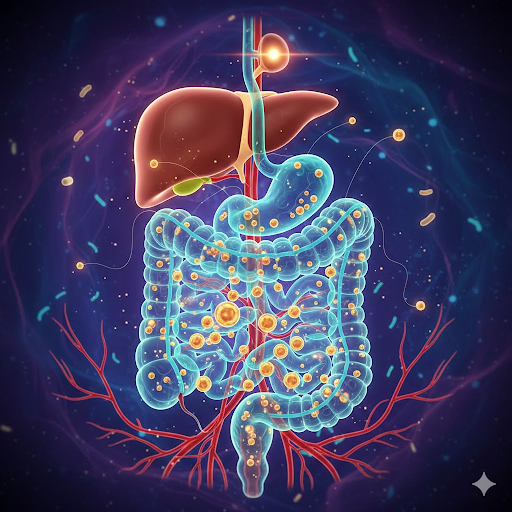

Digestion is often described as a mechanical process. Food is eaten, broken down, absorbed, and eliminated. Within this simplified narrative, bile is usually mentioned only in passing, if at all. Yet bile plays a critical and highly specialized role in human digestion, particularly in the absorption of fats and fat-soluble nutrients. When bile flow is impaired, digestion may appear normal on the surface while nutrient absorption quietly declines.
In recent years, digestive health research has begun to reexamine bile as a central metabolic regulator rather than a passive digestive fluid. Efficient bile flow influences how nutrients are absorbed, how gut bacteria behave, and how metabolic signals are coordinated between the liver, intestines, and microbiome. Understanding bile production and digestion as an integrated system helps explain why digestive symptoms and nutrient deficiencies can arise even in the absence of obvious gastrointestinal disease.
What Bile Is and Why It Matters
Bile is a complex fluid produced by the liver and stored in the gallbladder. It is composed of bile acids, cholesterol, phospholipids, and metabolic waste products. Its primary function is to emulsify dietary fats, breaking them into smaller droplets that digestive enzymes can act upon.
Without bile, fats cannot be effectively digested or absorbed. More importantly, bile is essential for the absorption of fat-soluble vitamins A, D, E, and K. These vitamins play crucial roles in vision, immune regulation, antioxidant defense, blood clotting, and hormone signaling.
Efficient bile flow ensures that dietary fats are processed correctly and that micronutrients embedded within those fats reach the bloodstream rather than passing through unabsorbed.
Bile Production and the Digestive Process
Bile production digestion begins in the liver. Hepatocytes synthesize bile acids from cholesterol, a process tightly regulated by metabolic signals and nutrient status. Once produced, bile is either secreted directly into the small intestine or stored in the gallbladder for later release.
When dietary fat enters the small intestine, hormonal signals trigger the gallbladder to contract, releasing bile into the digestive tract. Bile acids then surround fat molecules, allowing pancreatic lipase to break them down into absorbable components.
If bile production is insufficient or bile flow is sluggish, this process becomes inefficient. Fats may remain partially digested, leading to poor nutrient absorption even when digestive enzymes are present.
Bile Flow Efficiency and Nutrient Absorption
Bile flow efficiency refers not only to how much bile is produced, but also how effectively it is released, circulated, and recycled. Bile acids undergo enterohepatic circulation, meaning they are reabsorbed in the intestine and returned to the liver for reuse.
Disruptions at any point in this cycle can impair digestion. Reduced bile flow may lead to incomplete fat emulsification, while poor bile recycling can reduce bile availability over time.
Clinical observations have shown that individuals with impaired bile flow may experience symptoms such as bloating, greasy stools, nutrient deficiencies, and unexplained fatigue. These symptoms reflect malabsorption rather than inadequate intake.
The National Institutes of Health has discussed how bile acid dysfunction affects fat digestion and micronutrient status, particularly in conditions involving liver or gallbladder dysfunction.
Fat-Soluble Vitamins and Bile Dependence
Among the nutrients most affected by poor bile flow are fat-soluble vitamins. Unlike water-soluble vitamins, these compounds require bile to be absorbed efficiently.
Vitamin A supports vision and immune defense. Vitamin D regulates calcium balance and immune signaling. Vitamin E protects cell membranes from oxidative damage. Vitamin K is essential for blood clotting and bone metabolism. Deficiencies in these vitamins can develop slowly and may go unnoticed until symptoms become significant.
Importantly, supplementation alone may not resolve deficiencies if bile flow remains impaired. This highlights why digestive health must be addressed upstream rather than focusing solely on nutrient intake.
Modern Factors That Impair Bile Flow
Several lifestyle and dietary factors common in modern environments can negatively affect bile flow efficiency. Low-fat diets, for example, reduce the stimulus for bile release. When bile is not regularly mobilized, it can become stagnant, increasing the risk of impaired flow.
Highly processed diets may also alter bile composition. Excess refined carbohydrates increase insulin signaling, which can influence cholesterol metabolism and bile acid synthesis. Over time, this may affect bile quality and flow dynamics.
Certain medications, including some cholesterol-lowering drugs, can interfere with bile acid metabolism. While these medications may be necessary, their impact on digestion is increasingly recognized in digestive health research.
Harvard Health Publishing has noted that gallbladder and bile-related issues often present as digestive discomfort or nutrient malabsorption rather than acute pain, making them easy to overlook.

The Gut Microbiome and Bile Interaction
Bile does more than digest fats. It also shapes the gut microbiome. Bile acids possess antimicrobial properties that influence which bacterial species thrive in the intestine.
Efficient bile flow helps maintain a balanced microbial environment. When bile flow is impaired, microbial composition may shift toward species that tolerate lower bile concentrations. These changes can affect fermentation patterns, inflammation, and intestinal barrier function.
Conversely, the microbiome also modifies bile acids, converting primary bile acids into secondary forms that influence metabolic signaling. This bidirectional relationship means that bile production digestion and gut health are inseparable processes.
Bile as a Metabolic Signal
Beyond digestion, bile acids act as signaling molecules that regulate metabolism. They interact with receptors involved in glucose regulation, lipid metabolism, and energy expenditure.
When bile signaling is disrupted, these metabolic pathways may become less efficient. This connection helps explain why bile dysfunction is increasingly associated with metabolic disorders rather than being confined to digestive complaints. Educational resources focused on metabolic and digestive health, including those available on Dr. Berg’s, often emphasize bile flow as a foundational factor in both digestion and metabolic balance. You can explore this perspective further at https://www.drberg.com/keto
Gallbladder Health and Digestive Resilience
The gallbladder plays a central role in bile flow efficiency by concentrating and releasing bile in response to meals. Gallbladder removal, while often necessary, alters bile dynamics by eliminating this storage function.
Without a gallbladder, bile drips continuously into the intestine rather than being released in pulses. This can affect fat digestion, particularly with larger or higher-fat meals. Many individuals adapt over time, but some experience long-term digestive challenges related to bile timing rather than bile quantity.
Understanding bile production and digestion helps contextualize these experiences as physiological adaptations rather than unexplained symptoms.
Rethinking Digestive Health
Digestive health is often approached from the perspective of stomach acid, enzymes, or fiber intake. While all are important, bile flow efficiency is frequently overlooked despite its central role in nutrient absorption.
By shifting focus toward bile dynamics, digestive health can be understood as a coordinated process involving the liver, gallbladder, intestines, and microbiome. This integrated view helps explain why digestive symptoms often coexist with metabolic issues and nutrient deficiencies.
Rather than treating digestion as a linear pathway, bile highlights its cyclical and regulatory nature.
Bile flow efficiency is emerging as a key factor in understanding digestive health beyond surface-level symptoms. Efficient bile production and digestion support fat metabolism, micronutrient absorption, microbial balance, and metabolic signaling.
As research continues to uncover bile’s broader roles, digestive health strategies are likely to move upstream toward supporting bile dynamics rather than reacting to malabsorption after it occurs.
Understanding bile as both a digestive tool and a metabolic messenger reframes how nutrient absorption is evaluated. In doing so, it emphasizes that effective digestion is not simply about what is eaten, but about how the body processes and utilizes what enters the system.