
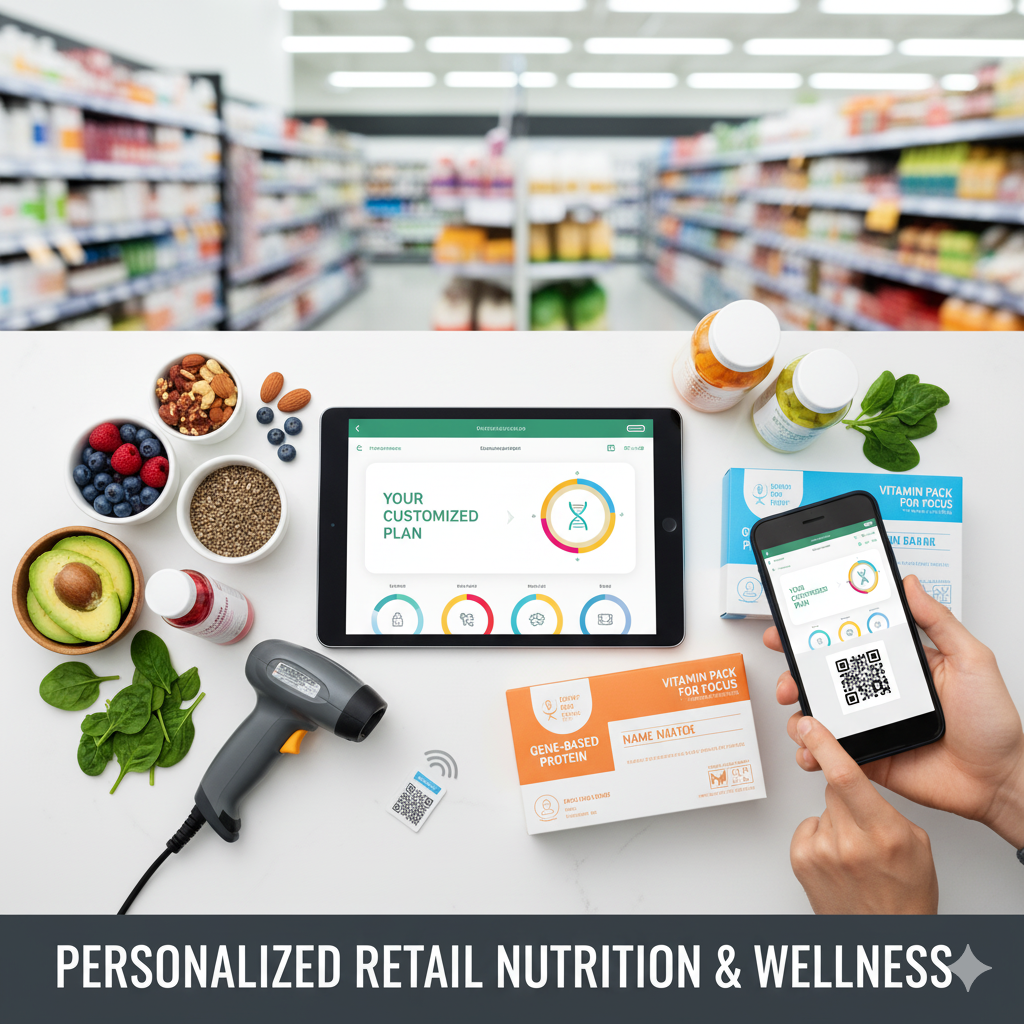

In an era where consumers increasingly demand control and customization in every aspect of their lives, from their social media feeds to their streaming preferences, a new frontier is emerging: hyper-personalized health. The global Personalized Retail Nutrition and Wellness market is exploding, moving far beyond one-size-fits-all multivitamins into a data-driven ecosystem of DNA-based meal plans, AI-powered supplement subscriptions, and at-home diagnostic kits. This seismic shift is attracting billions in investment and pitting legacy consumer packaged goods (CPG) companies against agile tech startups and healthcare giants in a high-stakes race to own the consumer’s wellness journey.
Driven by a potent combination of post-pandemic health consciousness, advancements in biotechnology, and the proliferation of wearable devices, consumers are no longer satisfied with generic advice. They want actionable, scientifically-grounded recommendations tailored to their unique biology, lifestyle, and goals. This demand is fueling unprecedented market growth.
The Market’s Meteoric Rise
The numbers speak for themselves. According to a recent comprehensive analysis by S&S Insider, The Personalized Retail Nutrition and Wellness Market size is projected to reach USD 12.58 billion by 2032, growing at a CAGR of 15.50% from 2024 to 2032. This staggering growth trajectory underscores a fundamental restructuring of the health and wellness industry, transforming it from a product-centric to a person-centric model.
“The paradigm is shifting from ‘what’s good for people’ to ‘what’s good for this person’,” explains Dr. Anya Sharma, a leading bioethicist and tech industry analyst. “We now have the technological tools—from affordable genomic sequencing to continuous glucose monitors and sophisticated AI algorithms—to decode individual responses to food and supplements. The companies that can effectively integrate this data into a seamless, trustworthy retail experience will define the next decade of consumer health.”
Top Players and Strategic Moves
The competitive landscape is a fascinating mosaic of established players, disruptive innovators, and strategic partnerships.
- The DNA Pioneers: 23andMe and Ancestry
Having amassed vast genetic databases, these companies are aggressively expanding beyond ancestry into health. 23andMe’s “Personalized Health Reports” and its partnerships with companies to develop targeted supplements represent a direct move into the retail space. Their key asset is the deep, immutable biological data of millions of users, providing an unparalleled foundation for personalization. - The Subscription Vanguards: Persona and Ritual
Companies like Persona (owned by Nestlé Health Science) and Ritual have perfected the direct-to-consumer model for personalized vitamins. Through detailed online quizzes, and in some cases, integration with blood test data, they create bespoke daily supplement packs delivered to the customer’s door. Nestlé’s acquisition of Persona signals a massive strategic bet by a CPG titan on the future of personalized nutrition, moving away from mass-market brands. - The Tech-Enabled Wellness Platforms: Zoe and Hims & Hers
Zoe has taken the market by storm with its sophisticated at-home test kit that analyzes gut microbiome, blood fat, and blood sugar responses. Its accompanying app provides personalized food scores and meal planning, backed by landmark scientific research. Similarly, telehealth giants like Hims & Hers are expanding from treatment into prevention, offering personalized vitamin regimens and wellness products based on online consultations and health assessments, creating a powerful hybrid healthcare-retail model. - The Retail and CPG Incumbents: Walmart and Procter & Gamble
Recognizing the threat and opportunity, retail behemoths are not sitting idle. Walmart has explored partnerships with personalized supplement companies and is leveraging its customer data to offer more tailored health product recommendations online. Procter & Gamble, through its brand Zevo, launched a line of personalized supplements, signaling that even the kings of mass production are adapting to the demand for customization. - The Wearable Integrators: Apple and Fitbit
While not direct retailers of nutrition products, Apple and Fitbit (Google) are critical players. The data from their devices—tracking sleep, activity, heart rate, and soon, blood glucose—is the continuous, real-time layer that static DNA or one-off tests cannot provide. Their Health and Fitbit apps are becoming the potential central hubs for an individual’s health data, positioning them as the gatekeepers who could partner with or outcompete specialized nutrition platforms.
Investment Floodgates Open
Venture capital and corporate investment are flowing into the sector at a breakneck pace. In 2023 alone, personalized health and nutrition startups raised over $2.5 billion globally. Key investment themes include:
- Diagnostic-Driven Personalization: Startups developing novel, affordable at-home testing for biomarkers, gut health, and food sensitivities are attracting significant funding.
- AI and Machine Learning: The “brain” behind personalization, companies that can build superior algorithms to translate complex data into simple, effective recommendations are seen as highly valuable.
- Platform Plays: Investors are betting on companies that aim to become the central operating system for a user’s health, aggregating data from various sources (DNA, tests, wearables) to provide a holistic view.
- Sustainable Personalization: A new wave of companies is merging personalized nutrition with sustainability, creating meal plans that are not only good for the body but also have a lower environmental footprint.
Challenges on the Horizon
Despite the explosive growth, the path forward is not without obstacles. Data privacy remains a paramount concern, as companies handle the most intimate details of an individual’s biology. Regulatory bodies like the FDA are grappling with how to oversee a flood of personalized products that make health claims based on proprietary algorithms, a gray area between general wellness and medical treatment.
Furthermore, the risk of overwhelming the consumer is real. “There’s a fine line between empowerment and paralysis,” cautions Dr. Sharma. “If you tell someone that 30 different data points mean they can’t eat avocados, the entire model backfires. The winning solutions will be those that simplify complexity and empower without inducing anxiety.”
The Future is Personalized
The journey toward truly personalized retail nutrition and wellness is just beginning. The next frontier includes real-time adjustments based on live data from smart patches and wearables, integration with electronic medical records for a truly unified health picture, and the use of AI to predict and prevent individual health dips before they occur.
As the market surges toward its projected $12.58 billion valuation, one thing is clear: the era of generic health is over. The future belongs to those companies that can successfully, and ethically, deliver on the promise of a health plan as unique as the individual themselves. The battle for the personalized plate is on, and the stakes have never been higher for both investor portfolios and public health.