
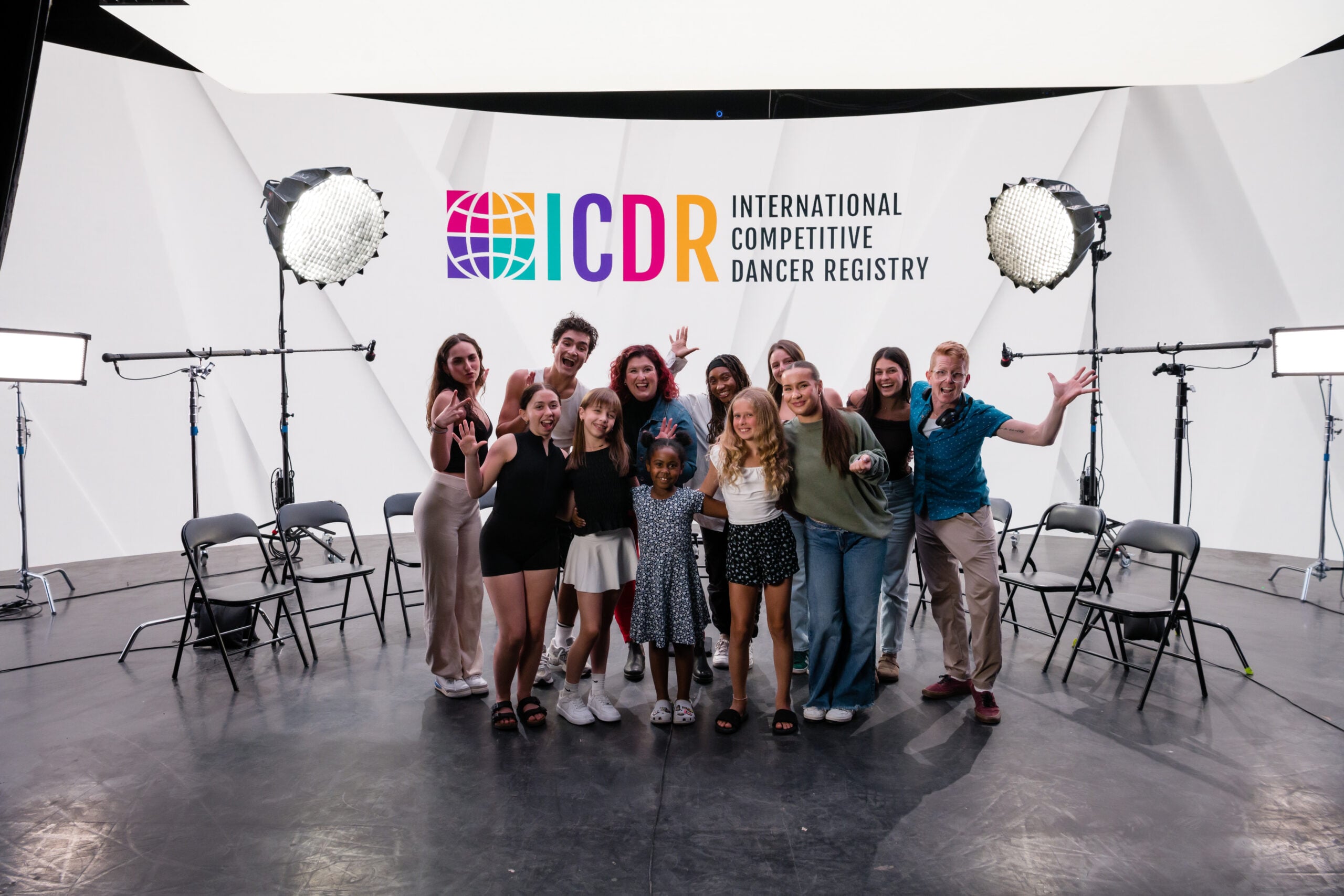

Photo: Tara Pickford (Studio Owner & Dance Safe Alberta Advocate) & Jamie Hodgins (Exec Dir of the ICDR) leading a 2025 dancer roundtable discussion on what it feels like to be a dancer in today’s competitive landscape.
Credit: Neil Garcia, VNTG Photography
There is a moment that happens at almost every dance competition across North America: your child finishes their performance, walks off the stage, and disappears into the backstage area to change, decompress, and wait with their studio group. You are still in your seat, trusting that the environment is being managed with care. In most cases it is, but without a unified way to verify who is who, event organizers are often managing these spaces with limited verified tools.
The backstage area is a space built on a long-standing tradition of trust. However, as the industry continues to evolve, there is a growing opportunity to move beyond the honor system toward more modern safeguards. In a world where digital security is becoming a standard in every other youth activity, providing a verified foundation for these spaces is the natural next step for competitive dance.
Kim McSwain, who has spent decades as a champion dancer, studio owner, and convention leader, views this as an essential evolution for the industry. As someone who works closely with children every day, she sees how much they are navigating—social pressures, the digital world, and the desire to succeed. Without the right safeguards in place, these pressures can affect how they see themselves. When an industry grows quickly, it has to grow responsibly, and right now there is an opportunity to strengthen how we protect our children, not just online but in the spaces where they train, compete, and change costumes in a rush.
Implementing Modern Solutions
The reality of backstage access today is that most events rely on legacy processes designed before the complexities of modern digital and physical security were fully understood. Currently, there is rarely a central system to confirm that any adult in a backstage area is a verified guardian of a child competing at that event.
Jamie Hodgins, Executive Director of the ICDR, has focused on building a solution that addresses this exact gap. By sending any system that integrates with ICDR a unique participant ID, connected to a verified guardian, the industry can finally bridge the gap between registration and who should be granted physical access in vulnerable spaces. We have already verified who a dancer is and who their guardian is. This allows us to provide verified guardian lists to event organizers so that only approved adults are present in these sensitive areas. This infrastructure is already in motion, with the pilot program recently surpassing 35,000+ verifications.
The Standard of Excellence
Some parents, understandably, assume that sophisticated systems are already in place to manage who has physical access to their children. While event owners are doing the best they can with the tools they have, the absence of a unified industry standard has historically made it difficult to provide total assurance.
Implementing a verified system is not about pointing fingers at past practices; it is about creating an environment where children feel safe, confident, and truly supported; learned progress. By adopting better identity and verification systems across the industry, such as secure digital identification and stronger accountability, events can finally ensure that every adult present is confirmed, verified and allowed to be there. Under a verified guardian control model, parents no longer have to wonder about the standards being met, they can have the peace of mind that comes with knowing.
Building a Stronger Community
The ICDR is a community-driven movement supported by some of the most recognized figures in dance, including industry icons, Brian Friedman and Sophia Lucia. These leaders are standing behind this initiative because they believe the solution must come from within the community, fueled by people who understand the heart of the industry.
In other athletic sectors, such as youth hockey or gymnastics, verified guardian access and identity-based check-in systems have been considered basic governance for decades. These systems foster greater confidence in a cohesive and safe environment. Dance deserves that same standard of professionalism and care.
The ICDR is offering verified danceIDs at no cost as a commitment to their mission to ensure that every dancer and family can participate without barriers. This is a collective opportunity to modernize our industry and celebrate it together, moving forward with the integrity that our artists and athletes deserve. The ICDR’s first port of call is to lockdown media to the right eyes only. The ancillary benefits of verifying for this reason close a lot of in-person safety gaps events and studios had no solutions for before ICDR.