

For the first thirty years of my life, I was the architect of a perfectly constructed façade. To the outside world, I was the definition of high-functioning: a thriving career, a robust social circle, and a disposition that people often described as “unshakable.” I was the person others leaned on. I was the problem solver.
But beneath the surface, I was drowning in a silent, invisible ocean.
The collapse didn’t happen all at once. It wasn’t a dramatic explosion; it was a slow, corrosive erosion of my spirit. It started as a hum of anxiety in the background of my mornings. Then, it evolved into a numbness that made laughter feel mechanical. Finally, it arrived at a destination I never thought I would visit: the persistent, intrusive thought that the world might be better off without me.
I remember the terrifying confusion of that time. I looked at my life and saw no logical reason for my despair. I hadn’t fought in a war. I hadn’t survived a catastrophic accident. By all societal metrics, I should have been happy. Because I couldn’t identify a “valid” reason for my pain, I concluded that the problem wasn’t what had happened to me—the problem was me. I believed I was fundamentally broken.
I was wrong. I wasn’t broken; I was carrying a lifetime of hidden, unprocessed trauma. And as I would soon discover, everything is resolvable.
The Illusion of “Normal”
The most dangerous aspect of trauma is that it often hides in plain sight. We tend to reserve the word “trauma” for the headline-grabbing events—natural disasters, physical violence, or extreme neglect. We underestimate “Little T” trauma: the chronic emotional invalidation of childhood, the pressure to perform to earn love, the grief we swallowed to keep the peace, or the bullying we laughed off to avoid looking weak.
I had spent decades minimizing my own experiences. I had buried my emotions so deep that I lost access to them. I became a master of dissociation, living entirely in my head while my body held the score.
The suicidal ideation was not a desire for death; it was a desperate scream from a nervous system that had been stuck in “fight or flight” for years. My body was exhausted from holding back a tidal wave of repressed emotion. I was running a marathon at full sprint while sitting perfectly still.
The Turning Point: Beyond Talk Therapy
When the pain became undeniable, I sought help. I started with traditional talk therapy, which was a crucial first step. It gave me a vocabulary for my distress. However, I found myself talking about my feelings rather than feeling them. I could intellectually analyze my sadness, but the heavy, crushing weight in my chest remained.
That is when I discovered a transformative approach to healing: Somatic Trauma Resolution.
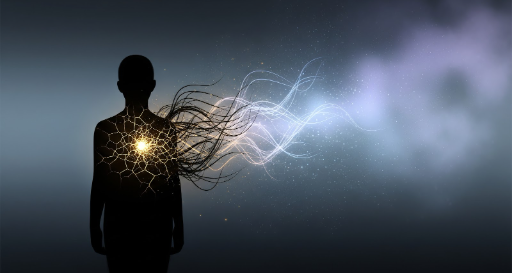
Unlike traditional therapies that focus on the cognitive (the story), somatic work focuses on the physiological (the sensation). The premise is simple but revolutionary: trauma is not just a memory stuck in the brain; it is energy stuck in the body. When we experience something overwhelming and cannot process it in the moment, that survival energy gets trapped in our nervous system.
My therapist asked me not to explain why I was sad, but to locate where the sadness lived in my body.
“It feels like a lead ball in my gut,” I told her.
“Stay with that,” she urged. “Don’t judge it. Just notice it. What does that lead ball want to do?”
For the first time in my life, I stopped running from the sensation. I let myself feel it. And then, something profound happened. The “lead ball” began to move. It turned into heat, then into shaking, and finally, into a release of tears so ancient and deep I didn’t know I was capable of crying them.
The Great Unveiling
Through this modality, I began to unearth the roots of my despair. It wasn’t a chemical imbalance, and it wasn’t a character flaw. It was a series of unresolved emotional injuries I had sustained as a child—moments where I felt unsafe, unseen, or unworthy—that I had frozen in time.
I realized that the suicidal thoughts were actually a protective mechanism. My psyche was trying to disconnect me from pain that felt too big to feel.
This journey led me to a startling realization: Most people are walking around unaware of their deep-seated pain.
We live in a culture that rewards suppression. We are taught to “suck it up,” to “look on the bright side,” and to value productivity over well-being. As a result, millions of us are walking around with nervous systems that are dysregulated, reacting to the present moment through the lens of past wounds we don’t even remember.
We see this in the CEO who flies into a rage over a minor error, the partner who shuts down completely during conflict, or the “perfect” parent who secretly drinks to numb the anxiety. These aren’t bad people. They are people carrying hidden loads, unaware that there is a way to set them down.
The Path to Resolution
The most empowering lesson I learned is that the brain and body are neuroplastic. They can change. The pathways of trauma are deep, yes, but they are not permanent.
My healing didn’t happen overnight. It was a process of peeling back layers. It involved:
- Grieving: Mourning the younger version of myself who didn’t get what they needed.
- Re-regulating: Teaching my nervous system that it was safe to relax.
- Confronting: Facing the ugly, scary emotions—rage, shame, terror—and realizing they couldn’t kill me.
As I processed these buried emotions, the suicidal thoughts didn’t just fade; they evaporated. They were no longer necessary because I was no longer trying to escape my own body. I began to feel moments of genuine joy, not just the performance of it. The hollow feeling in my chest was replaced by a sense of solidity and grounding.
Everything is Resolvable
If you are reading this and feeling that familiar, heavy darkness, I need you to know something: You are not broken. You are injured. And injuries can heal.
The despair you feel is not a life sentence. It is a symptom of unprocessed history. It is a sign that something within you is begging for attention, compassion, and release.
The journey requires courage. It requires looking into the shadows we have spent a lifetime avoiding. But on the other side of that shadow is a freedom you cannot imagine until you taste it.
- Awareness is the first step. Acknowledge that the pain is real.
- Connection is the vehicle. Find a therapist, a somatic practitioner, or a support group who understands trauma. Do not do this alone.
- Patience is the key. Healing is non-linear.
My story is not unique. It is a testament to the resilience of the human spirit. We are designed to heal. We are wired for repair. No matter how deep the wound, how long it has been hidden, or how dark the thoughts have become, there is a path through.
Please, stay for the resolution. It is waiting for you.