
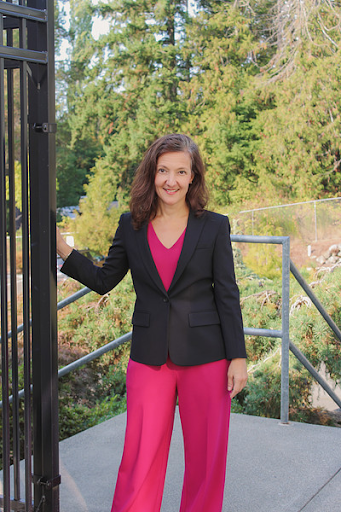

When most physicians build a career, their influence stays within exam rooms, hospital corridors, and the quiet routines of patient care. Dr. Niran Al-Agba’s path began this way too—rooted in community medicine, grounded in trust, and shaped by the generational legacy of the pediatric practice she inherited from her father. But her voice didn’t remain confined to the clinic. It expanded. First into newspaper columns, then into statewide conversations, and eventually into courtrooms across the country where families were fighting for their children. What began as thoughtful commentary evolved into something much larger: a national voice for fairness in child-abuse investigations.
This evolution wasn’t planned. It wasn’t strategic. It grew naturally out of moments where she saw that the system intended to protect children sometimes harmed families through misunderstanding, bias, or overly rigid interpretations of medical findings. She understood the complexity of child development, the nuance behind pediatric injuries, and the human reality behind every chart. And as she spoke up, more people began listening.
A Physician Who Entered Public Discourse Long Before Entering the Legal Arena
Dr. Al-Agba didn’t begin her public work in courtrooms. She began it on paper. As a columnist for the Kitsap Sun, she wrote with clarity, honesty, and a grounded understanding of the issues affecting children and families. Her writing stood out because it wasn’t political posturing or detached policy commentary. It was informed by what she saw every day: the fears parents carried, the pressures families faced, and the gaps in systems that were supposed to support them.
Those columns revealed something important about her voice. She had an uncommon ability to turn complex issues into accessible explanations. She could take a charged topic—like pediatric care, public health, or community well-being—and articulate it in a way that resonated with readers who were tired of jargon and formalities. Her writing never exaggerated. It never sensationalized. It invited people into the conversation with a steady, calm tone that encouraged understanding.
This same style would later become critical in courtrooms, where clarity often determines whether the truth is heard.
How a Newspaper Columnist Became a Sought-After Medical Expert
As her writing gained wider attention, attorneys began taking notice—not because she was seeking legal work, but because her explanations showed a depth of pediatric understanding that was missing from many child-abuse evaluations. They saw someone who understood the difference between theoretical injury patterns and real-life pediatric behavior. Someone who wasn’t afraid to call out systemic issues. Someone who could articulate nuance in a way decision-makers would understand.
First, it was one attorney asking her to review a case. Then another. Then dozens. Each referral came from word-of-mouth, often from attorneys working with families who were overwhelmed by allegations that didn’t make sense. They needed someone capable of interpreting medical evidence with real-world context. They needed someone who could separate speculation from fact. And they needed a communicator.
Her writing had already proven that she could explain complicated issues clearly. That clarity became a lifeline inside courtrooms where misunderstanding frequently outpaced truth.
The Power of a Voice That Bridges Medicine and Humanity
Many medical experts excel at analyzing data but struggle to convey their conclusions without overwhelming an audience. Others can communicate effectively but lack the practical pediatric background necessary for accurate interpretation. Dr. Al-Agba bridges both worlds.
In her second-opinion work, she reconstructs cases with a level of detail that reveals what others missed—developmental timelines, environmental factors, medical conditions, or family contexts that transform a suspicious injury into an understandable one. But when she speaks about those findings, she does so with the clarity of someone who has spent years translating medical concepts into everyday language for parents.
This combination—a data-driven mind paired with a communicator’s clarity—became her greatest strength in the courtroom. Judges, attorneys, and even opposing experts could follow her reasoning because she didn’t hide behind technicalities. She elevated the truth through simplicity, precision, and integrity.
How National Coverage Amplified the Work She Had Long Been Doing
Everything changed when regional and national outlets began covering her work. The Seattle Times profile opened the door. It introduced the public to the quiet, behind-the-scenes role she had played in preventing wrongful family separations. From there, journalists and producers began seeking her insights for high-profile cases, investigative features, and long-form reporting on child-welfare failures.
She also participated in background interviews for the New York Times. These opportunities weren’t the result of marketing or self-promotion—they emerged because journalists recognized the rare combination she offered: credibility, independence, and the willingness to speak openly about problems others ignored.
The public began to see what attorneys already knew. She wasn’t simply a medical reviewer. She was a national advocate for accuracy, fairness, and the right of families to be evaluated without prejudice.
From the Printed Page to the Witness Stand—The Consistency That Defines Her Impact
Despite her expanding influence, one thing about Dr. Al-Agba has never changed: her commitment to truth. Whether writing columns, reviewing sealed medical files, or testifying in court, she approaches every situation with the same principles—honesty, independence, and compassion.
In the courtroom, these principles matter tremendously. Judges pay attention when an expert’s reasoning is transparent. Attorneys rely on her ability to demonstrate not only what the injury shows but why the initial interpretation was flawed. Families sense that she sees them as human beings, not as accusations waiting to be disproven.
The consistency of her voice—steady, factual, and grounded—became the reason she is trusted across twenty-three states. It is the reason attorneys seek her early in a case. And it is the reason families describe her involvement not as a service, but as a turning point.
Why Her Voice Matters in a System That Often Silences Families
Child-welfare cases are emotionally charged, procedurally complex, and heavily influenced by technical medical language that most parents cannot challenge. In this space, families often lose their ability to speak for themselves long before their case reaches a judge. Their explanations are dismissed. Their confusion is misread as guilt. Their fear is taken as evidence.
Dr. Al-Agba’s entry into these cases restores balance. She provides the clarity families cannot articulate, the context the system often overlooks, and the factual grounding that prevents assumptions from defining a child’s future. Her voice becomes a counterweight to systems that prioritize speed over accuracy.
And because she has always written, spoken, and practiced medicine with the same core belief—that truth must lead—her message carries weight inside the institutions that shape these outcomes.
The Evolution of a Voice That Refuses to Stay Silent
Dr. Niran Al-Agba never set out to become a national voice for families under investigation. Yet looking back, the path seems inevitable. A childhood spent watching her father practice medicine with integrity. A career built on relationships, trust, and real pediatric experience. A public writing career rooted in transparency and advocacy. And a second-opinion practice that revealed systemic failures too significant to ignore.
Every step strengthened the voice she uses today. A voice that challenges flawed assumptions. A voice that restores fairness. A voice that expands beyond exam rooms and into courtrooms, newsrooms, and legislative conversations.
Families call her when everything is on the line because her voice does more than explain injuries—it gives them back their power.