
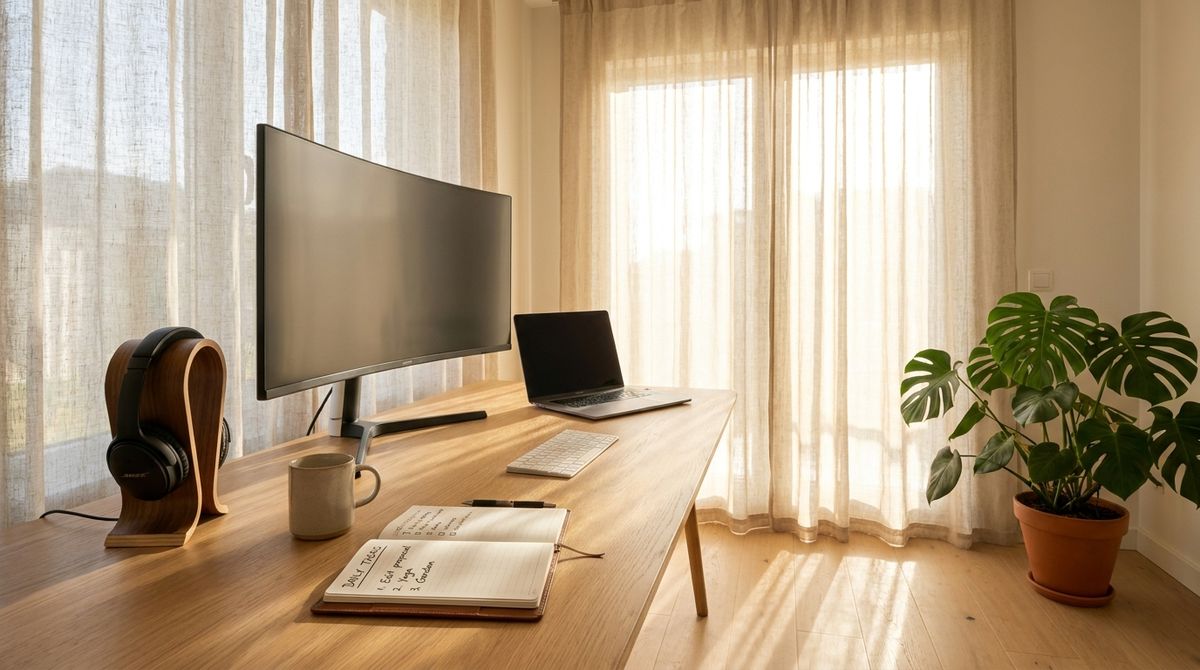

For the modern entrepreneur, the boundary between professional ambition and personal sanctuary has become increasingly fluid. Working from home offers unparalleled flexibility, yet it also presents a significant challenge: how to maintain professional intensity and focus while surrounded by the distractions of daily living. Many professionals find that their initial workspace, often carved out of a spare corner or a kitchen table, lacks the structural integrity required to support long-term growth and sustained focus. To elevate your entrepreneurial career, it is necessary to rethink the home environment not merely as a place of residence, but as a deliberately designed infrastructure for your business.
Beyond the Basic Office: Rethinking Your Footprint
A successful transition from a casual remote work setup to a dedicated entrepreneurial headquarters requires a shift in mindset. It is not enough to simply allocate a room for a desk; you must consider how the space functions within the broader context of your home. A professional sanctuary requires a footprint that separates the mental demands of business from the relaxing atmosphere of your living quarters. This separation is crucial for maintaining a healthy perspective on both work and leisure.
When considering your office footprint, think about the natural flow of your day. Does your current space allow for quiet, uninterrupted deep work, or is it constantly interrupted by the rhythm of household activities? A purposeful workspace should be positioned in a location that minimizes noise and visual distractions. This might involve reallocating space within an existing floor plan or dedicating a specific wing of your home to professional endeavors. By creating a physical transition—a dedicated entry point to your office—you establish a psychological boundary that helps signal to both yourself and your family that work mode has commenced.
Integrating Professional Infrastructure for Daily Efficiency
The foundation of a high-performance workspace lies in its infrastructure. Professional productivity is heavily dependent on environmental factors such as lighting, acoustics, and air quality. Many entrepreneurs neglect these elements, focusing instead on furniture or decor, yet it is these underlying systems that dictate your ability to sustain long hours of focused effort.
Effective lighting design involves balancing natural light with task-specific artificial lighting to reduce eye strain and maintain energy levels throughout the day. Acoustics play an equally vital role, as sound management can significantly enhance your ability to conduct meetings or focus on complex tasks without interference. Achieving a seamless blend of productivity and comfort requires attention to detail, much like the resources found at huizhiseed.com, where functional design meets aesthetic balance. By investing in these foundational elements, you create a space that supports rather than hinders your daily output.
Planning for Scalability in Custom Home Design
For those who are in the process of building a home or planning a significant renovation, the opportunity to design a business-ready environment is immense. This is not the time for ad-hoc solutions. Instead, it is the moment to incorporate infrastructure that will support your business as it evolves. Think about the long-term needs of your enterprise: will you eventually need a dedicated conference space for clients? Do you require an isolated area for high-volume storage or specialized equipment? Will your internet connectivity and power load needs increase as you grow?
When constructing a home that must serve dual purposes as a residence and a business headquarters, the structural planning must be rigorous. Consulting comprehensive guides like Designwithdeb.com can provide the necessary framework for thinking through these complex construction decisions. By incorporating scalability into your original design, you avoid the disruptive need for future modifications and ensure that your office remains a reliable asset as your professional demands shift and expand over time.
Enhancing Your Daily Workflow through Intentional Design
Once the infrastructure of your space is sound, the focus shifts to how you inhabit and organize that environment. The layout of your furniture, the accessibility of your tools, and the organization of your physical documents all play a significant role in your efficiency. An intentional design approach minimizes friction, allowing you to move seamlessly between tasks without unnecessary disruptions.
A well-organized workspace serves as an extension of your professional processes. Consider the placement of your primary equipment and the ease with which you can access essential resources. For further guidance on these practical enhancements, you might revisit our previous article on ways to refine your professional workspace setup, which highlights how subtle changes to your environment impact your daily performance. This level of intentionality ensures that your physical space actively contributes to your professional success rather than acting as a source of frustration.
Practical Steps for Organizational Clarity
- Map out your primary workflows to determine the necessary proximity of your essential tools.
- Establish a consistent cable management system to prevent visual clutter and maintain safety.
- Dedicate specific zones within your office for different activities, such as deep work, administrative tasks, and client interactions.
- Implement a storage strategy that keeps your active workspace clear and free from distractions.
- Regularly evaluate your environmental setup to ensure it continues to meet your evolving business needs.
The Intersection of Professional Demands and Personal Life
Perhaps the most challenging aspect of an entrepreneurial home office is maintaining the boundary between your professional responsibilities and your personal life. When your work is situated within your place of rest, it becomes easy for the two to blend together, leading to fatigue and diminished focus. A truly professional sanctuary recognizes the necessity of both concentration and decompression.
To navigate this, focus on creating clear rituals that signal the start and end of your professional day. This might involve a specific sequence of actions before sitting down at your desk or a deliberate transition period after closing your laptop. By respecting the physical boundaries of your designated office space and establishing clear mental boundaries for your professional tasks, you create a sustainable model for your entrepreneurial life. Remember that your workspace is designed not only to boost your efficiency during the day but also to support your overall well-being outside of work hours. Investing in the structural and environmental aspects of your home office is, ultimately, an investment in the longevity and quality of your professional career.